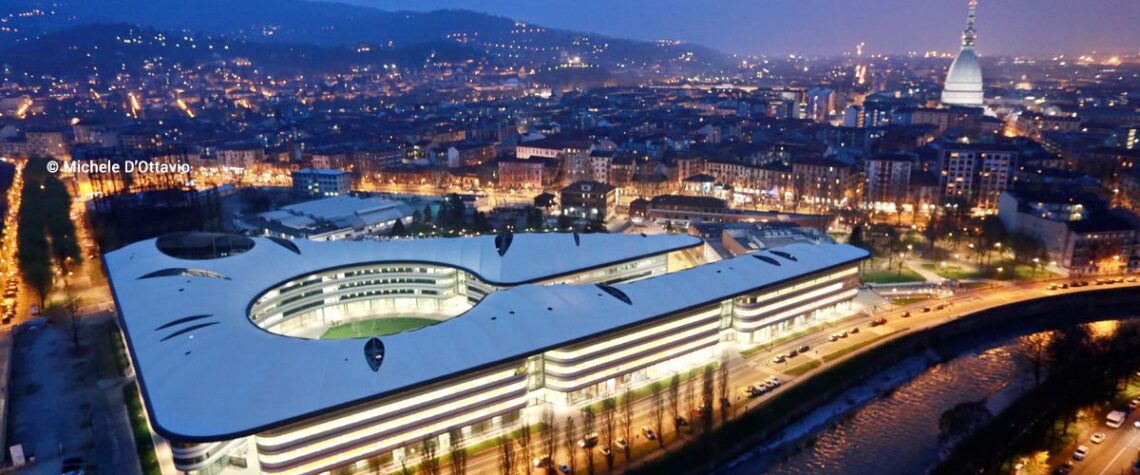
The University of Turin is one of Italy’s oldest and most prestigious universities. With a long-standing tradition in education, research and public life, it has played a major role in shaping Italian political, social, cultural and scientific history.
Over the decades, many leading figures of the 20th century studied at the University of Turin, including Antonio Gramsci, Piero Gobetti, Palmiro Togliatti, Massimo Bontempelli, Norberto Bobbio and Cesare Pavese. The university also counts among its alumni three Nobel Prize winners in Medicine — Salvatore Luria, Rita Levi Montalcini and Renato Dulbecco — as well as two Presidents of the Italian Republic, Luigi Einaudi and Giuseppe Saragat.
Today, the University of Turin is one of the largest higher education institutions in Italy. Hosting around 75,000 students, 3,838 academic, administrative and technical staff, and 2,600 postgraduate and PhD students, it can be described as a true “city within a city”. With 120 buildings located across Turin and other key areas of Piedmont, the university contributes every day to culture, research, innovation, training and employment.
A comprehensive university open to international research and training
The University of Turin offers courses across nearly all disciplines, except Engineering and Architecture, with more than 150 undergraduate and postgraduate degree programmes. Its academic tradition is particularly strong in areas such as history, philosophy, law, economics and medicine, while in recent years it has also expanded significantly into modern and strategic sectors such as food science, social sciences, information technology, performing arts and communication sciences.
Its research centres in Medical Diagnostics, Biosensoristics and Nanotechnologies are among the most advanced in Italy, confirming the university’s role as a major research institution at national and international level.
The international dimension is one of the defining features of the University of Turin. The university participates in international projects, develops joint educational courses, promotes bi-national degrees and international PhD programmes, and maintains formal cooperation agreements with universities and institutions all over the world.
Its international profile includes around 3,000 international students, more than 30 double-degree or joint-degree programmes, 26 courses taught in English, over 130 doctorates in joint supervision, three international PhD programmes, and 1,300 Erasmus+ mobility agreements for students, trainees, researchers and teachers. It also hosts visiting professors, researchers and students, and promotes mobility through several international funding schemes.
The University of Turin has more than 430 academic cooperation agreements with universities and research institutions in 79 countries. It is also involved in development cooperation with non-EU countries and participates in international networks and partnerships with institutions in India, China, Asia, Latin America, Eastern Europe, the Mediterranean region and other areas of the world.
The university is also a member of UNITA – Universitas Montium, an alliance of comprehensive research universities from five countries, including Portugal, France, Spain, Italy and Romania. Through this alliance and its wider international engagement, the University of Turin contributes to European cooperation, mobility and academic innovation.
A university committed to inclusion and social responsibility
The University of Turin has a strong commitment to social issues and public responsibility. Its work addresses areas such as environmental sustainability, equal opportunities, the rights of people with special needs, inclusion and social cohesion.
This commitment is also reflected in its participation in European projects and in its approach to student inclusion. The university has consistently promoted equal opportunities and access, inclusivity, diversity and fairness, with particular attention to students with fewer opportunities, non-binary identities and disabilities.
This sensitivity is fully reflected in CONSPIRE – CONSPIracism and RAdicalisation Risks in Europe, where inclusion and diversity are not considered marginal principles, but part of the project’s educational and democratic mission.
The Department of Cultures, Politics and Society: coordinating CONSPIRE
Within the University of Turin, the Department of Cultures, Politics and Society is the promoter and coordinator of CONSPIRE.
The department brings together scholars with complementary areas of expertise, creating an interdisciplinary team able to address the project’s themes from different perspectives. This is particularly relevant for CONSPIRE, which focuses on conspiracy theories, radicalisation risks, disinformation, health-related narratives, democratic participation and civic resilience.
The project benefits from the contribution of researchers working across sociology, political science, religion, communication, discourse analysis, media studies and democratic processes.
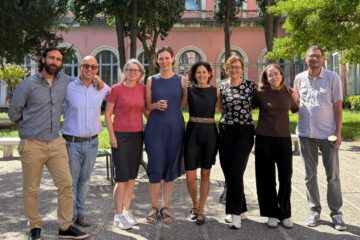
Stefania Palmisano, Associate Professor in Sociology of Religion at the University of Turin, coordinates the project. She is also coordinator of the UniTo research centre CRAFT – Contemporary Religion and Faiths in Transition. Her research focuses on contemporary religious experiences, alternative spiritualities and the ways in which spiritual beliefs contribute to new forms of global pluralism and alternative rationalities. After the COVID-19 emergency, the diffusion of conspiracy theories became particularly relevant to this field of research, especially in relation to health, science and belief systems.
Massimiliano Demata, Associate Professor of English Language and Translation, brings expertise in discourse analysis, critical discourse analysis, political and mass media discourse, conspiracy theories, populist discourse, computer-mediated communication, multimodality, translation and ideology. His research is particularly relevant to understanding how conspiracy narratives are constructed, circulated and legitimised through language and media.
Luca Ozzano, Associate Professor of Political Science, contributes expertise in political science, comparative politics, politics and religion, and the relationship between religious and political dynamics. Since 2017, he has chaired the “Religion and Politics” standing group of the European Consortium for Political Research, strengthening the project’s connection with wider European academic networks.
Together, these scholars provide CONSPIRE with a strong interdisciplinary foundation, connecting the study of conspiracy theories with religion, politics, communication, media and democratic life.
From research to innovative teaching
The University of Turin brings to CONSPIRE significant experience in European project management, digital education and innovative learning.
The university has led three Erasmus+ Cooperation Partnerships in Higher Education and has participated in 14 KA220-HED projects as a consortium member. It has also been involved in projects under KA226 – Partnerships for Digital Education Readiness and KA203 – Strategic Partnerships for Higher Education.
A particularly relevant previous experience is From Cure to Care: Digital Competences and Spiritual Assistance in Healthcare, led by Professor Palmisano. This project allowed the University of Turin to develop strong expertise in digital literacy, online pedagogical content and e-learning training programmes. CONSPIRE builds on this experience by developing a structured online training pathway combined with participatory and non-formal educational methods.
The format of the CONSPIRE training programme is therefore rooted in previous European experience, but expands it toward new challenges: conspiracy theories, misinformation, radicalisation risks and democratic resilience.
Communication, dissemination and long-term impact
The Department of Cultures, Politics and Society also has strong expertise in communication and dissemination, thanks to its experience in educational and training initiatives involving hundreds of participants and beneficiaries, as well as its participation in several European projects.
The department is supported by an internal Press Office for institutional communication, which delivers regular news and updates to the academic community. Within CONSPIRE, the University of Turin is responsible for key activities such as the development and maintenance of the project web platform, the production of the documentary, and the management of the project’s social media accounts.
The university will also play a central role in ensuring the follow-up of the project. This includes supporting the transferability of CONSPIRE’s teaching tools, evaluating their impact on students’ ability to critically analyse media sources, and promoting the innovative participatory learning models developed through the face-to-face workshops.
The sustainability dimension is particularly important. CONSPIRE is designed not only as a university course, but as a model that can be adapted and integrated into other youth education settings beyond higher education.
A leading partner for a European educational challenge
The University of Turin’s role in CONSPIRE reflects its wider mission: combining academic excellence, international cooperation, social responsibility and innovative education.
As project coordinator, the university brings together research expertise, European project experience, digital learning capacity and a strong commitment to inclusion and democratic participation.
Through CONSPIRE, the University of Turin contributes to one of the most urgent educational challenges of our time: helping students understand complex information environments, recognise conspiracy narratives, critically assess media sources and participate more consciously in democratic life.
In doing so, the university confirms its role not only as a historic institution of knowledge, but also as a European laboratory for active citizenship, critical thinking and democratic resilience.